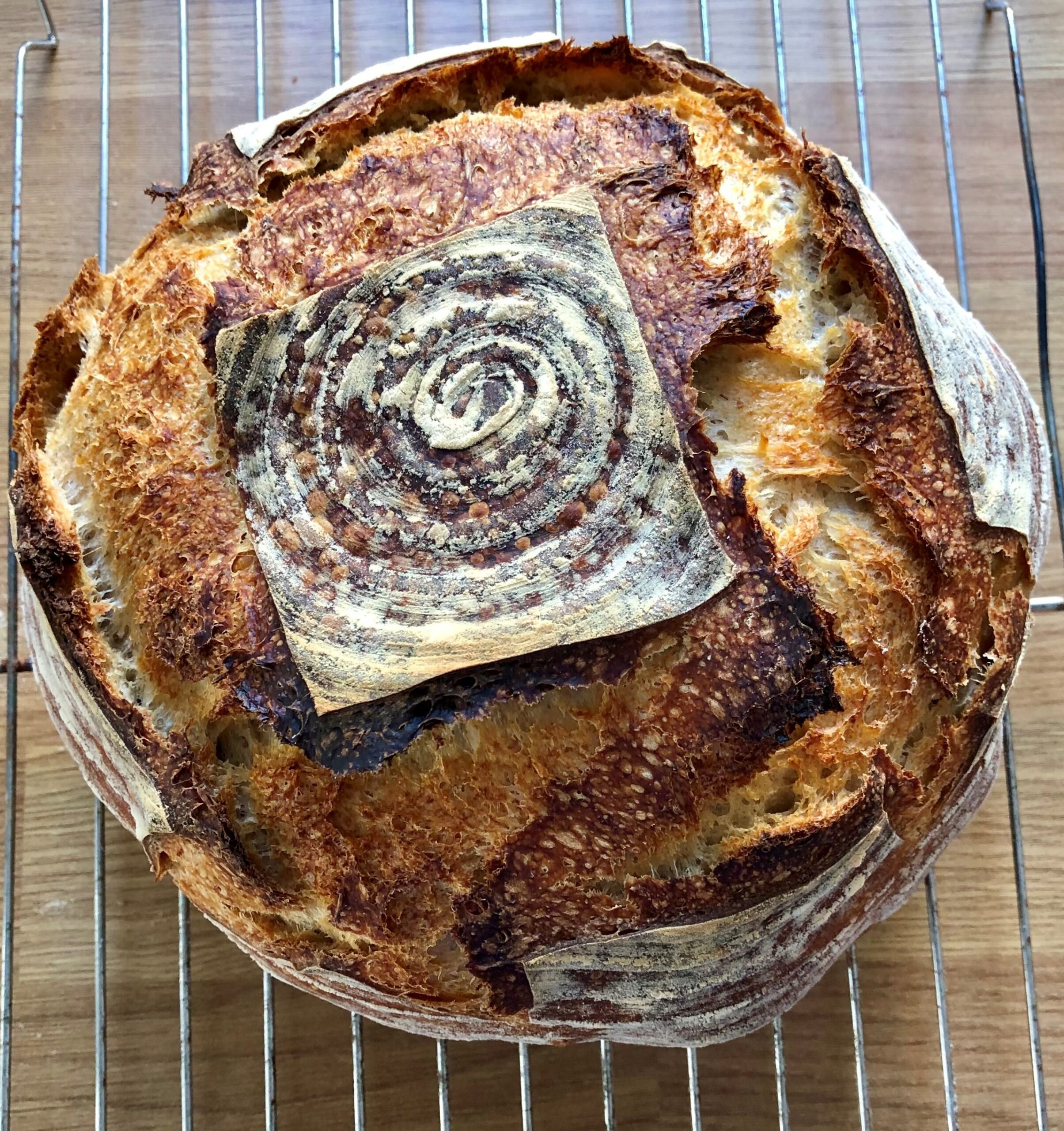
In the words of the ‘Real bread Week’ campaign, ‘Seize the dough to take control of the food that you and your family enjoy!’
The aim of the initiative is to spotlight those bakeries baking real bread, as well as to encourage more people to bake their own!
Avoid the cocktail of additives that are contained in industrial loaves and take advantage of the benefits of baking and eating real bread – some people even find it therapeutic!
We caught up with avid sourdough baker, Martin, to find out what makes baking real bread worth the effort…
What inspired you to begin baking?
Finding out that one common additive often found in bread is L-cysteine. This is an amino acid that is used as a dough conditioner – it helps to improve the texture and shelf-life of bread, it can be derived from both natural and synthetic sources, as indicated by the label.
The synthetic sources are derived from duck, chicken feathers and cow horns, but the most common source used in food comes from human hair. That was it for me, the bread journey was started with a 7g packet of yeast, a bag of flour, salt, and a little time.
What are the challenges and rewards of baking your own bread?
Initially, the challenge is making time. As with all things worthwhile in life, you need to make that investment; however, with a bit of scheduling, you can fit your baking journey around your life.
You don’t need fancy equipment, James Morton’s mug bread recipe from his book, Brilliant Bread, uses just a mug for measuring and the basic ingredients: flour, water, salt and yeast, plus a little elbow grease. Give it a go, nothing can go wrong!!!
Don’t pressurise yourself about being a daily baker and having the perfect loaf, just start, and enjoy eating home baked bread – that’s the reward 😊.
How would you say home baked bread differs from its shop bought equivalent?
Well, its tastes so much better, and as it’s baked the same way as bread from centuries ago, it is real. The oldest evidence of bread-making has been found in a 14,500-year-old Natufian site in Jordan’s northeastern desert – around 10,000 BC. So, you will be following in the footsteps of our ancestors.
What types of breads do you bake? Any favourites and why?
The world of bread is endless, all sorts of loaves from flat to oval, sweet, enriched breads such croissants and brioche. I bake a sourdough tin loaf daily, but my favourite, as I am savoury man, is pizza Neapolitan style.
What advice would you give to someone considering the great bake?!
Just start. You only need the basic ingredients. Try the mug bread recipe from James Morton, and don’t worry about whether bread is under or over proved. Just throw it in the oven, it will taste great – don’t get hung up about it.
Each bake is a learning experience. There are loads of resources on the Web and Youtube; if you are considering buying a book, just buy one! As you become more confident, think about baking a sourdough loaf – you will need a ‘starter’ (a living culture of bacteria and yeast) which will remove the need for manufactured yeast.
Richard Bertinet, a renowned Breton baker, explains how to make your first starter. He has a decent bread and patisserie shop in Bath called ‘The Bertinet Kitchen’, check it out. Be wary of starting your sourdough journey, the next thing will be chickens! Enjoy the bake!
To find out more about the campaign, please visit the website.