
This spring, around 100 new apple trees have been planted at community locations across the Bridgend Sustainable Food Partnership area.
The trees have been grown by Ediculture, an educational trust dedicated to regenerative food culture which runs activities around foraging, growing, cooking and healthy eating.
When the Bridgend Sustainable Food Partnership team spotted a call out from Ediculture to find a new home for 100 spare apple trees, the new distribution project was developed. With experience of developing previous city-based growing projects, the goal of the project is to get fruit trees into schools and community centres to increase people’s access to fresh food from within their own community.
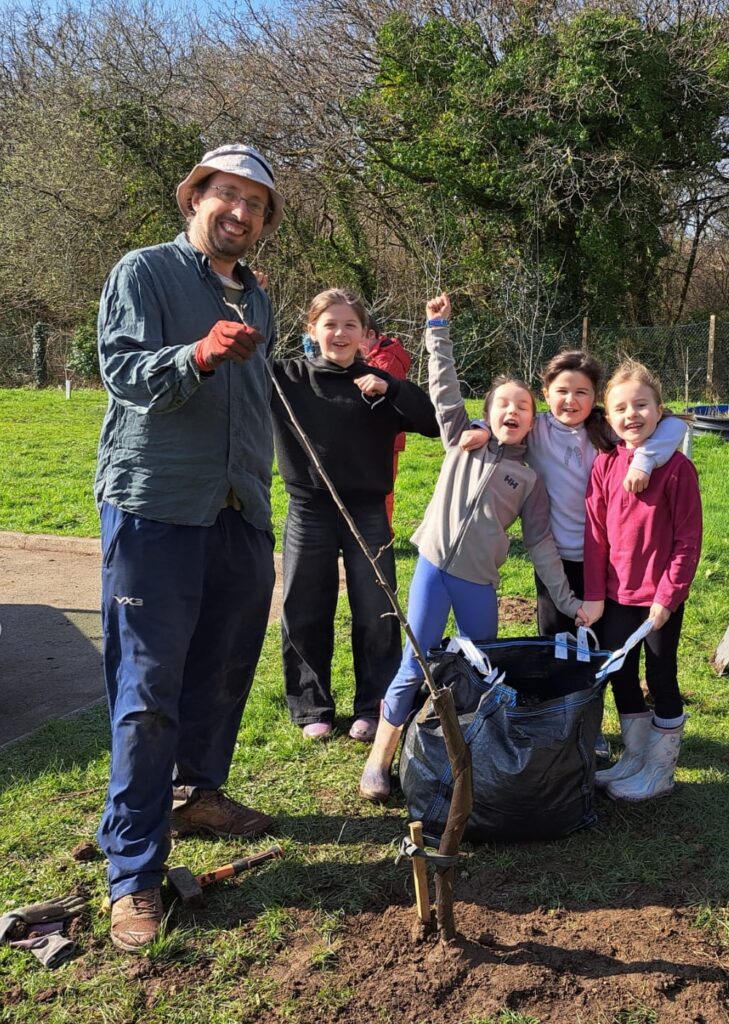
Stephen Watts, founder of Ediculture, explained:
“The project is about getting good food to people, which can be harvested locally for free. Fruit trees are a really productive way of doing that – when these apple trees mature, they’ll be producing around 200 kilos of fruit per tree. That’s a huge amount for the community, or for food charities in each location.
“Planting in schools, and encouraging kids to get involved, has also been a really important part of the project, ensuring they can learn about growing, harvesting and where their food comes from.”
Stephen has been collecting heritage apple varieties since 2010, and now grows around 180 different types of apples on the Coed Hills site in the Vale of Glamorgan:
“I’ve been focused on finding apples that will grow well in our local conditions. Fruit trees can be really particular to local areas, they don’t all grow well everywhere.
“They’ve all been grown without chemical fertilisers or pesticides, and we’ve selected varieties that are going to be rugged enough for the conditions we’re planting in. It’s a mix of Welsh heritage varieties, along with others we’ve gathered from orchards around the UK which we think will adapt well to the location.
“We’ve planted a mix of dessert and cooking apples so they’ll be a versatile crop, and chosen varieties which can be harvested throughout the year, offering an extended season – up to nine months in a good year,” he said.
The trees being planted are around three years old and will be fully mature in 10-15 years. That will provide an opportunity for communities to come together to manage the harvest and create activities around communal cooking and preserving such as chutney workshops or juicing projects.
“There’ll be lots of ideas for what to do when it comes to harvesting because we’ll have a real abundance of fruit by then. That’s the fun side of these projects – we’ll have so much fruit to share with everyone in the communities around the trees,” said Stephen.
Stephen was co-author of The Abundance Handbook: A guide to Urban Fruit Harvesting